

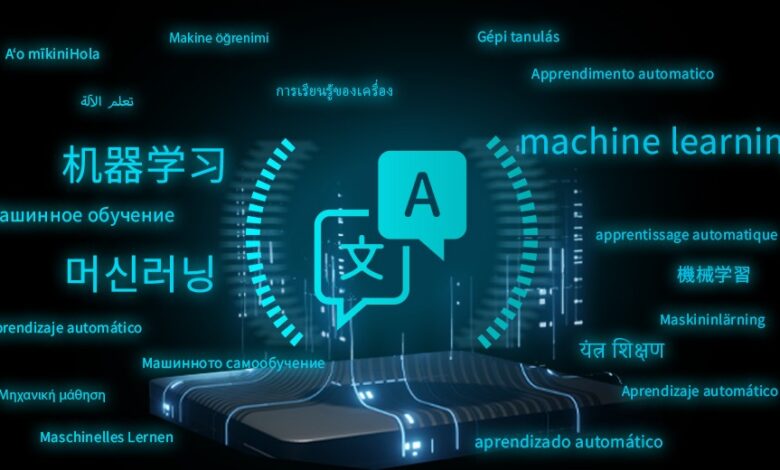
Artificial intelligence has transformed many industries, and translation services are no exception. What was once a field dominated by human linguists has now incorporated machine learning, natural language processing, and neural networks to enhance accuracy and efficiency. While AI-driven translation tools have made remarkable strides, they also present challenges that must be addressed to ensure linguistic integrity and cultural sensitivity.
The Advancement of Neural Machine Translation
Traditional machine translation relied on rule-based systems and statistical models, which often produced rigid or unnatural translations. AI-powered neural machine translation (NMT) has revolutionized the process by allowing computers to analyze entire sentences rather than translating word by word. This approach ensures greater fluency and contextual accuracy, reducing the risk of awkward phrasing.
Leading AI translation models, such as Google’s Neural Machine Translation and OpenAI’s language models, continuously learn from vast datasets, improving their output over time. As these systems refine their ability to recognize idioms, colloquialisms, and tone, AI translations are becoming more sophisticated, making them suitable for professional and creative content.
Real-Time Translation and Instant Communication
AI has made real-time translation more accessible than ever before. Businesses, travelers, and global teams can now communicate seamlessly across languages using AI-driven applications. Speech-to-text and speech-to-speech technologies have improved dramatically, allowing conversations to be translated instantly without the need for human interpreters.
For instance, companies conducting international meetings can use AI-powered translation software to bridge linguistic gaps, ensuring clear and accurate communication. This advancement benefits industries such as customer service, where chatbots and automated systems can now handle multilingual inquiries with greater precision.
The Role of AI in Localization
Translation is only one aspect of effective communication—localization is equally important. AI is now assisting businesses in adapting content for different markets, ensuring that translations align with cultural expectations and regional preferences.
Automated localization tools analyze factors such as currency, date formats, idiomatic expressions, and humor, adjusting translations to match the intended audience. For example, a marketing campaign that works well in one country may require modifications in another to maintain the right tone and appeal. AI-driven localization helps brands maintain consistency while tailoring content to diverse audiences.
AI and the Challenge of Context
Despite its advancements, AI still faces challenges in understanding context. Language is nuanced, and words can carry multiple meanings depending on their placement within a sentence. While AI translation tools have improved their ability to recognize context, they occasionally produce errors when faced with complex sentence structures or ambiguous phrasing.
For example, the English phrase “He saw the man with binoculars” could imply that the subject used binoculars to see the man or that the man being observed had binoculars. A skilled human translator would clarify the intended meaning based on context, whereas AI may struggle with such distinctions.
To address this limitation, developers are integrating more sophisticated algorithms that analyze broader linguistic patterns. Future AI models will likely refine their ability to interpret subtleties, reducing the risk of misinterpretation.
The Impact on Professional Translators
While AI has streamlined many aspects of translation, it has not replaced human expertise. Professional translators remain essential for high-stakes projects that require cultural insight, emotional nuance, and artistic interpretation.
Literary translations, legal documents, and creative marketing campaigns demand more than word-for-word accuracy—they require an understanding of tone, intent, and cultural resonance. AI can assist by generating preliminary drafts, but human oversight ensures that translations remain polished and meaningful.
Many translators now work alongside AI, using machine-generated text as a starting point before refining and adapting it. This hybrid approach increases efficiency while preserving linguistic quality. As AI continues to advance, the role of translators will likely shift toward editing and contextual refinement rather than simple text conversion.
Ethical Considerations and the Future of AI Translation
As AI translation becomes more widespread, ethical considerations must be addressed. Automated translations can unintentionally reinforce biases present in training data, leading to problematic or insensitive outputs. Developers must work to mitigate these risks by refining algorithms and incorporating diverse linguistic perspectives.
Data privacy is another concern, particularly when AI processes sensitive documents or confidential conversations. Ensuring secure and responsible AI use will be crucial as translation technology continues to expand its reach.
Looking ahead, AI will likely refine its ability to produce high-quality translations while preserving cultural authenticity. The synergy between human expertise and machine learning will shape the future of translation, making global communication more fluid, precise, and sophisticated.
